Hands-on casting work across three pours: formwork, reinforcement, slump testing, placement and finishing.
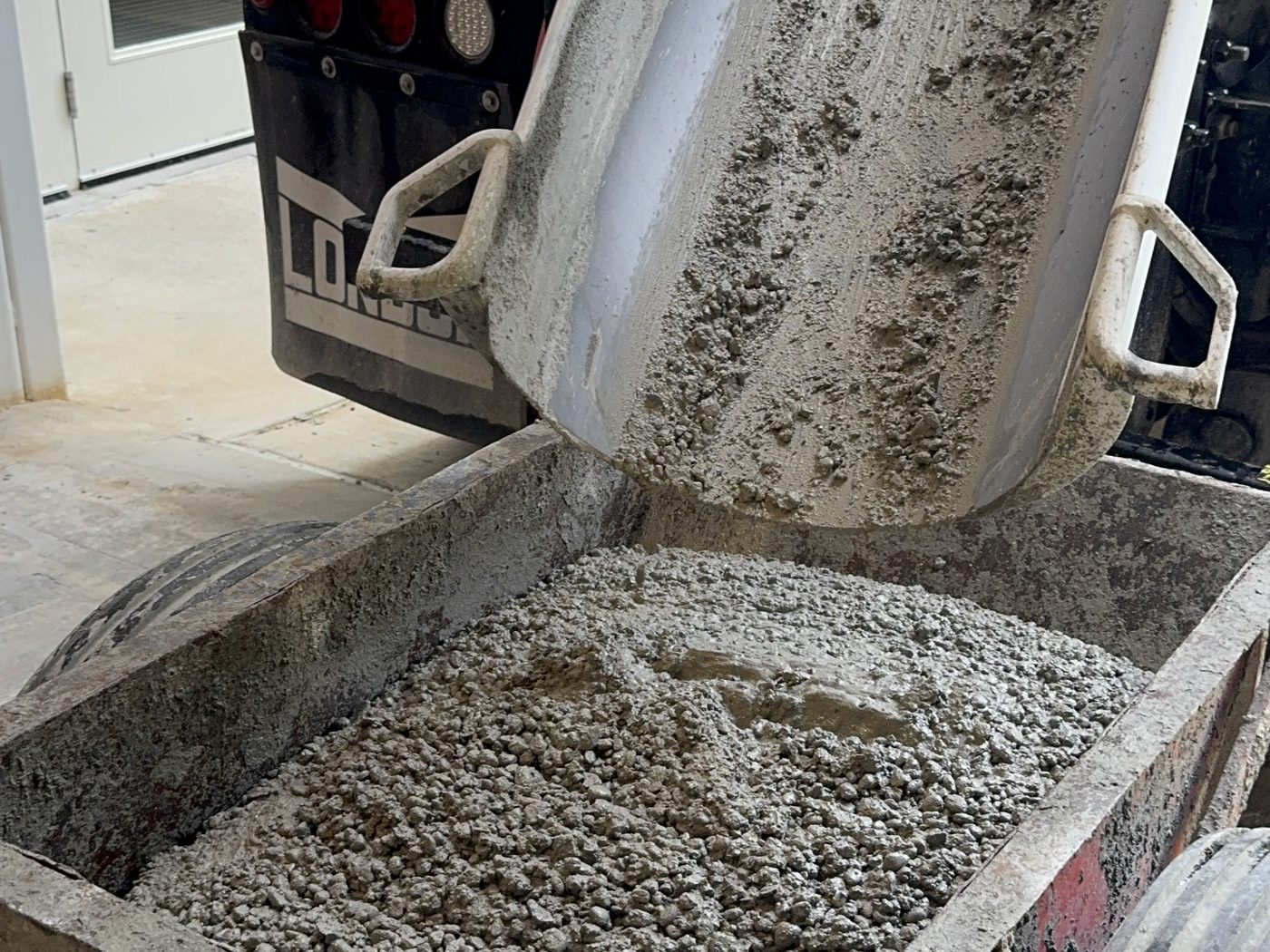
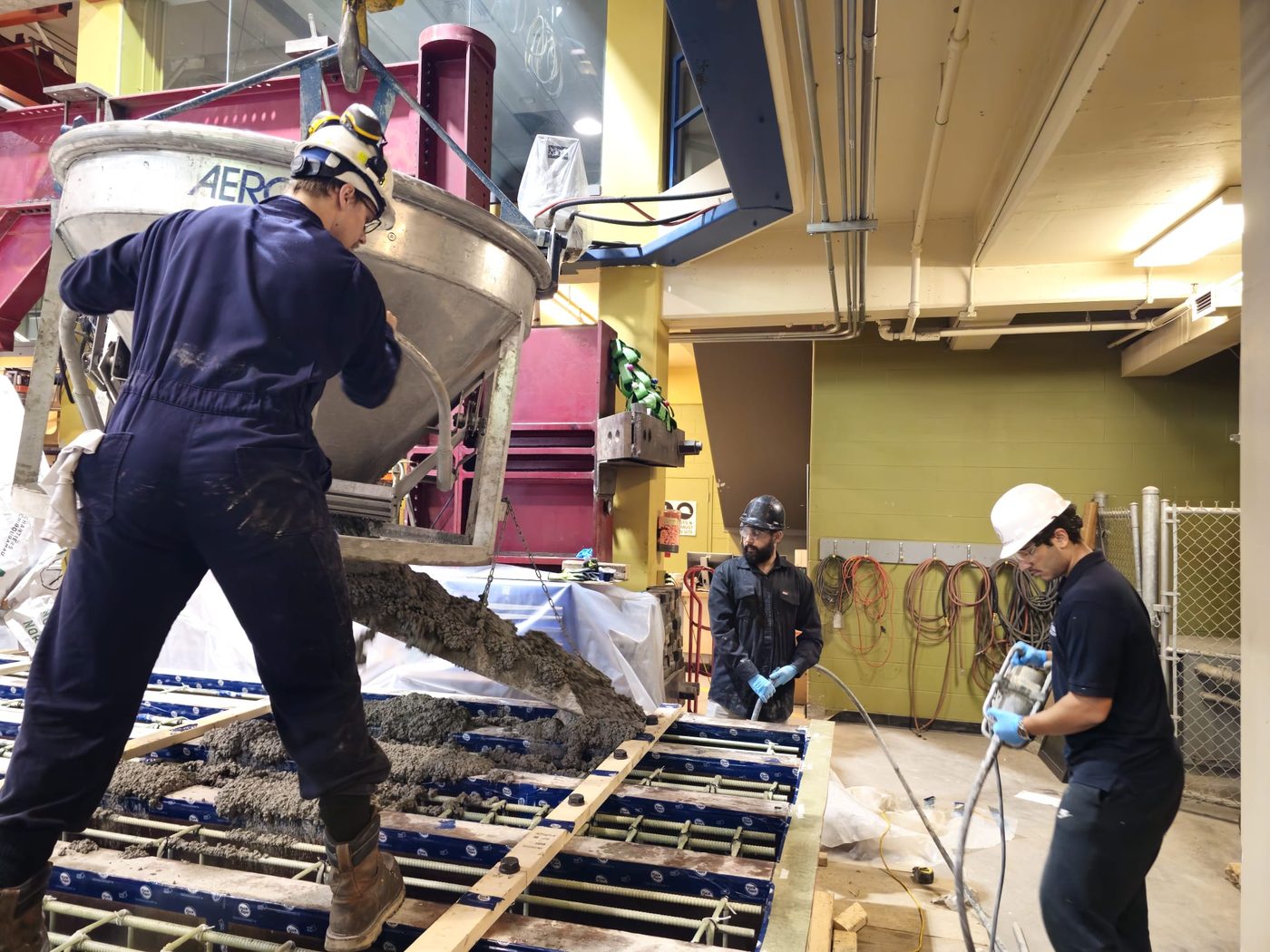
01Discharging concrete from the chute into the formwork
Role
Undergraduate research assistant
Facility
U of T Structural Testing Facilities
Scope
Three pours supporting several concurrent research programs
01What this covers
Specimen casting sits behind almost every experiment in the lab, and the quality of the pour decides whether the test that follows is usable. Across three pours I worked on formwork and reinforcement preparation, fresh-concrete quality control, placement, consolidation and finishing for panels, cylinders and containment specimens.
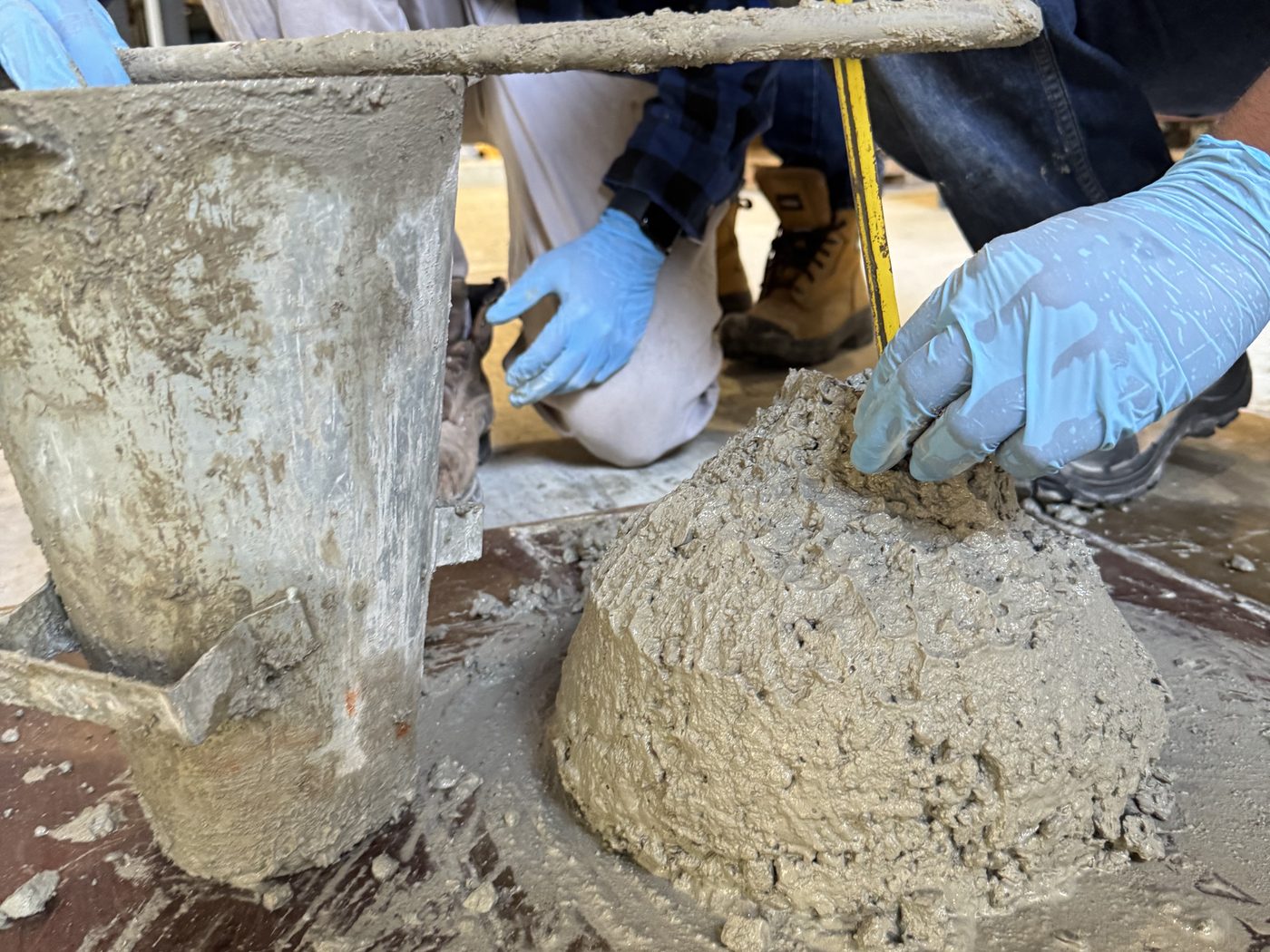
02Slump test on the fresh mix before placement
02Work performed
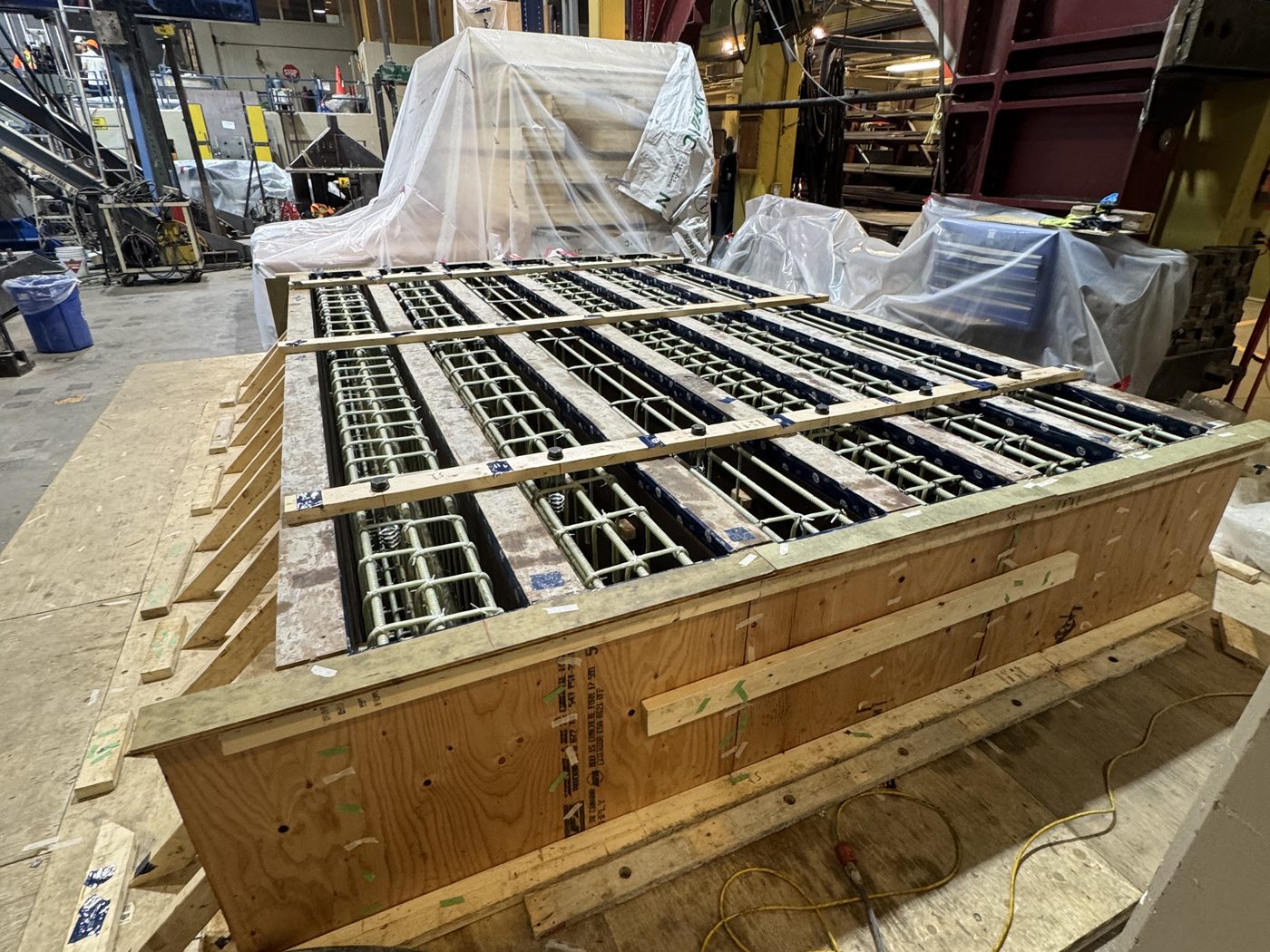
Assembling and preparing formwork, rebar layouts and threaded-rod perimeter steel.
Slump testing and fresh-concrete quality checks before placement.
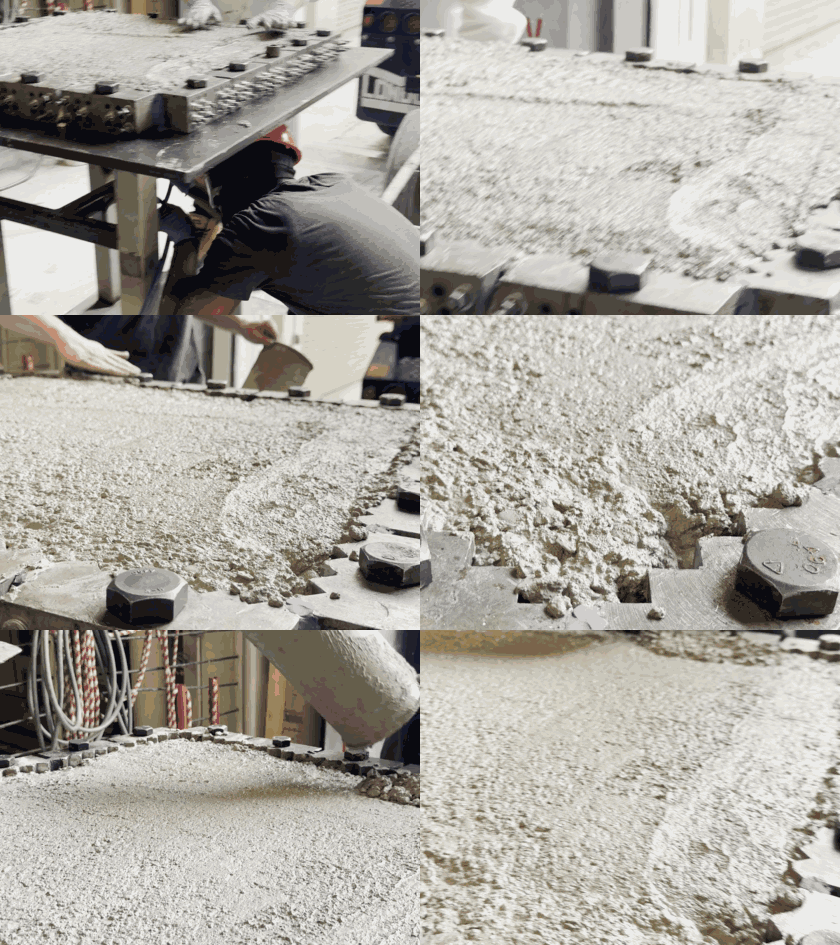
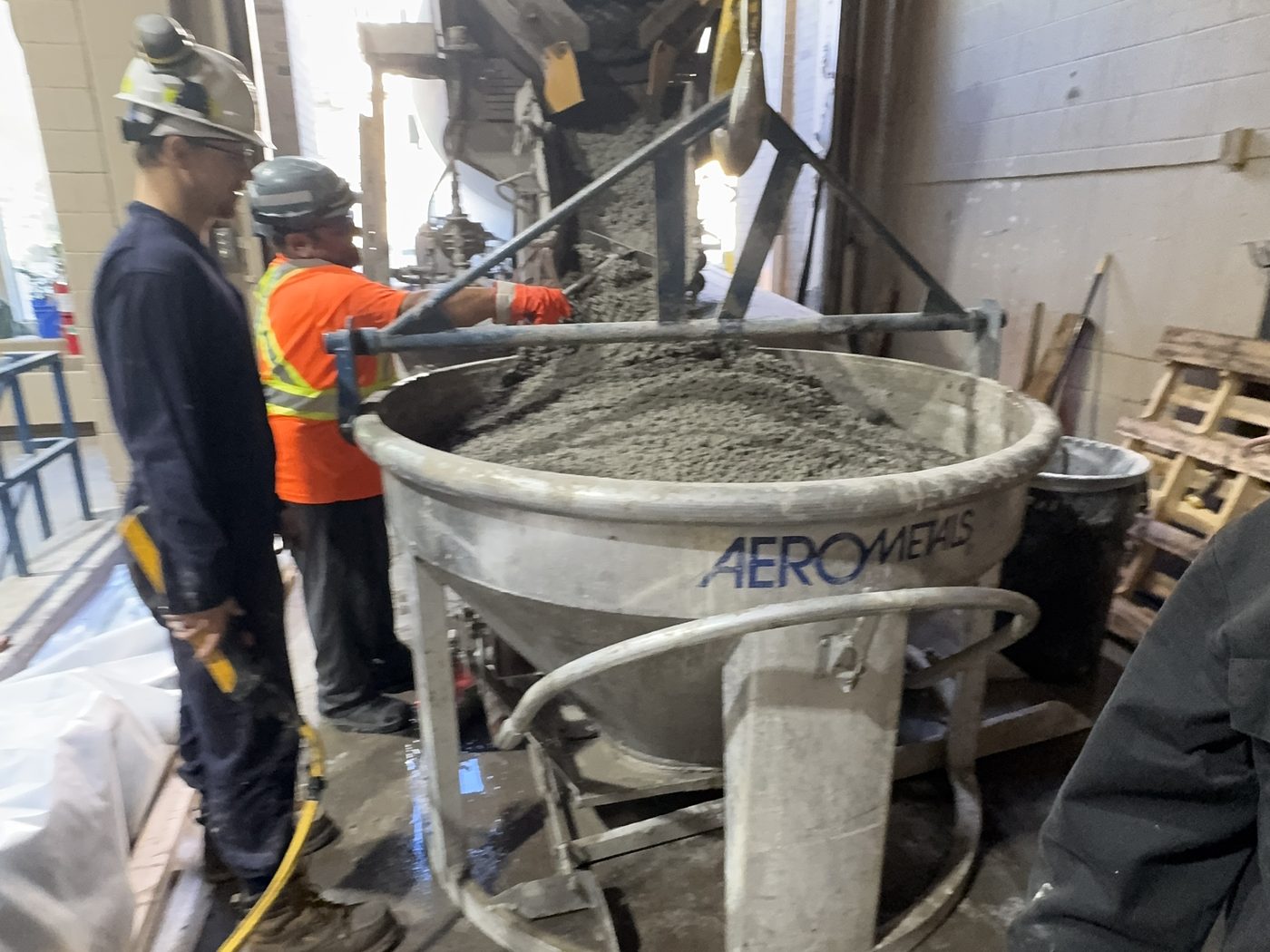
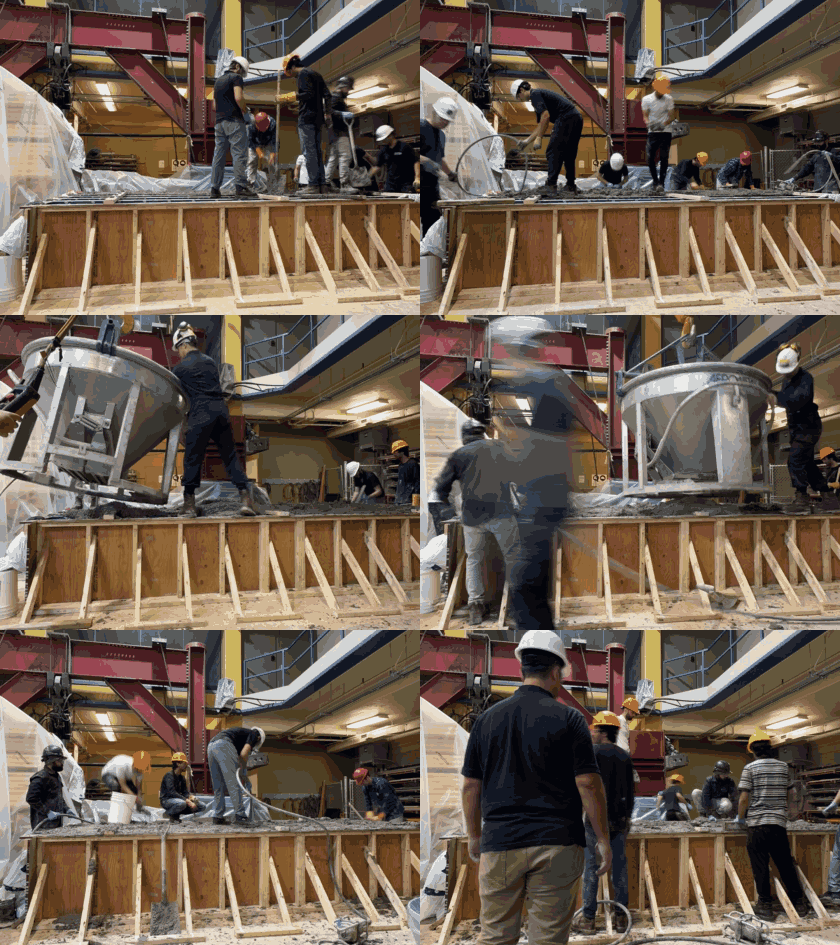
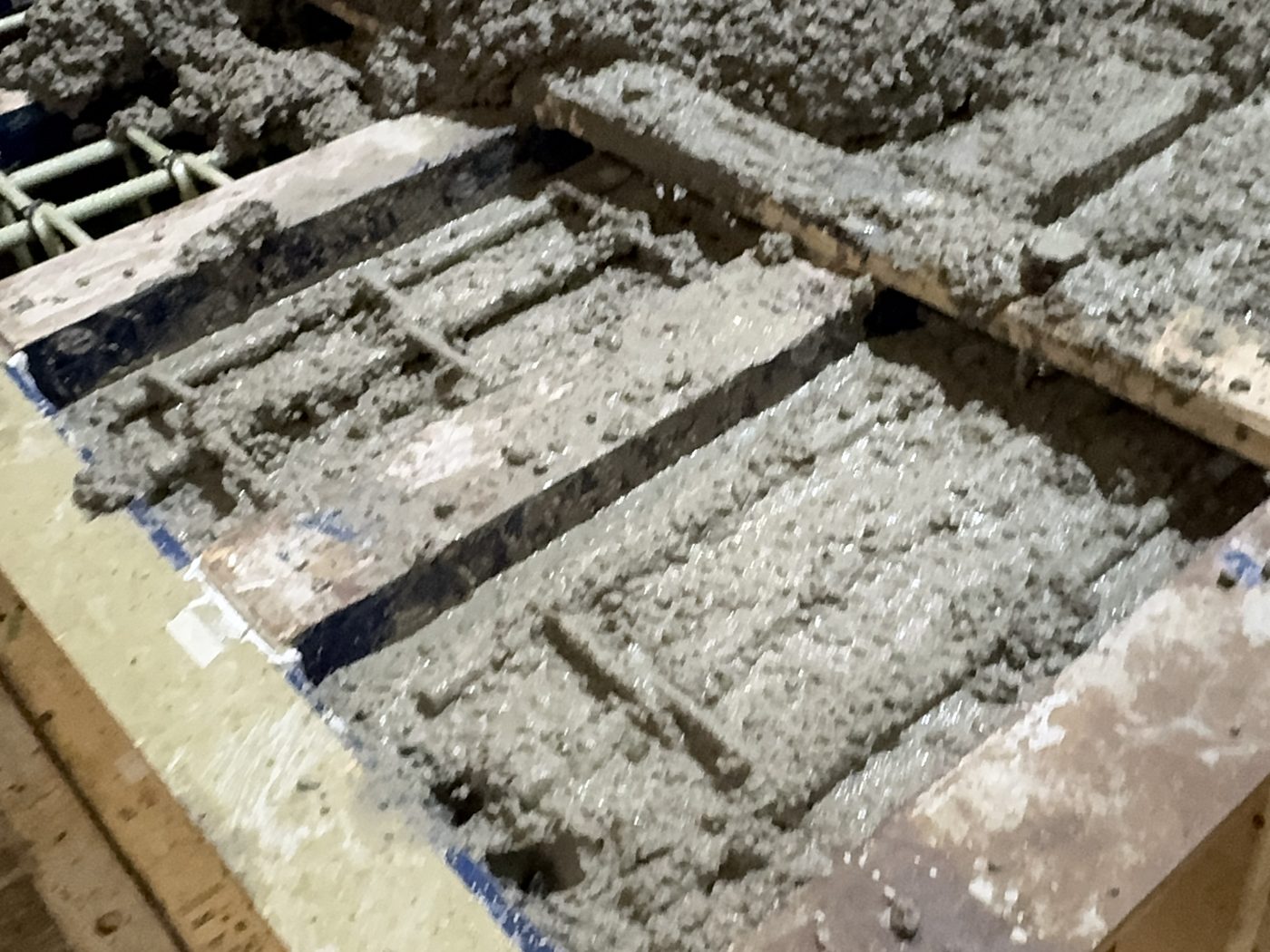
Placing concrete from chute and bucket, consolidating with internal vibrators.
Screeding, finishing and covering specimens for controlled curing.
Cleaning, stripping and preparing specimens for instrumentation and testing.
ClipPlacing and consolidating concrete during Pour 1
03Why it matters
Placement procedure directly affects bleed water, surface finish and premature cracking, all of which change what a specimen measures once it reaches the test frame.
04More from the lab
04Reinforcement and formwork ready for a panel pour
05Placing and spreading concrete across the panel form
06Bucket charge arriving at the formwork
ClipPour 3: discharging from the bucket into the formwork