STF · Nuclear infrastructure
Nuclear Containment Structure — Concrete Cracking & Leakage
Casting, sealing and tensile-testing concrete specimens to relate crack width and pressure to air leakage rate.
- Graduate researcher
- Jacob Yager
- Professor / PI
- Professor Oh-Sung Kwon
- Research area
- Nuclear infrastructure & prestressed concrete
- Application
- Predicting leakage and long-term performance of nuclear containment structures
01Project objective
Develop more accurate models for the long-term performance of nuclear containment structures through experimental testing of cracked concrete. The research investigates relationships between crack geometry, crack width, internal pressure and air leakage rate, helping engineers predict containment performance as structures age.
The broader research also examines how concrete shrinkage and prestressing losses contribute to cracking over time and consequently affect containment leakage.
02My contribution
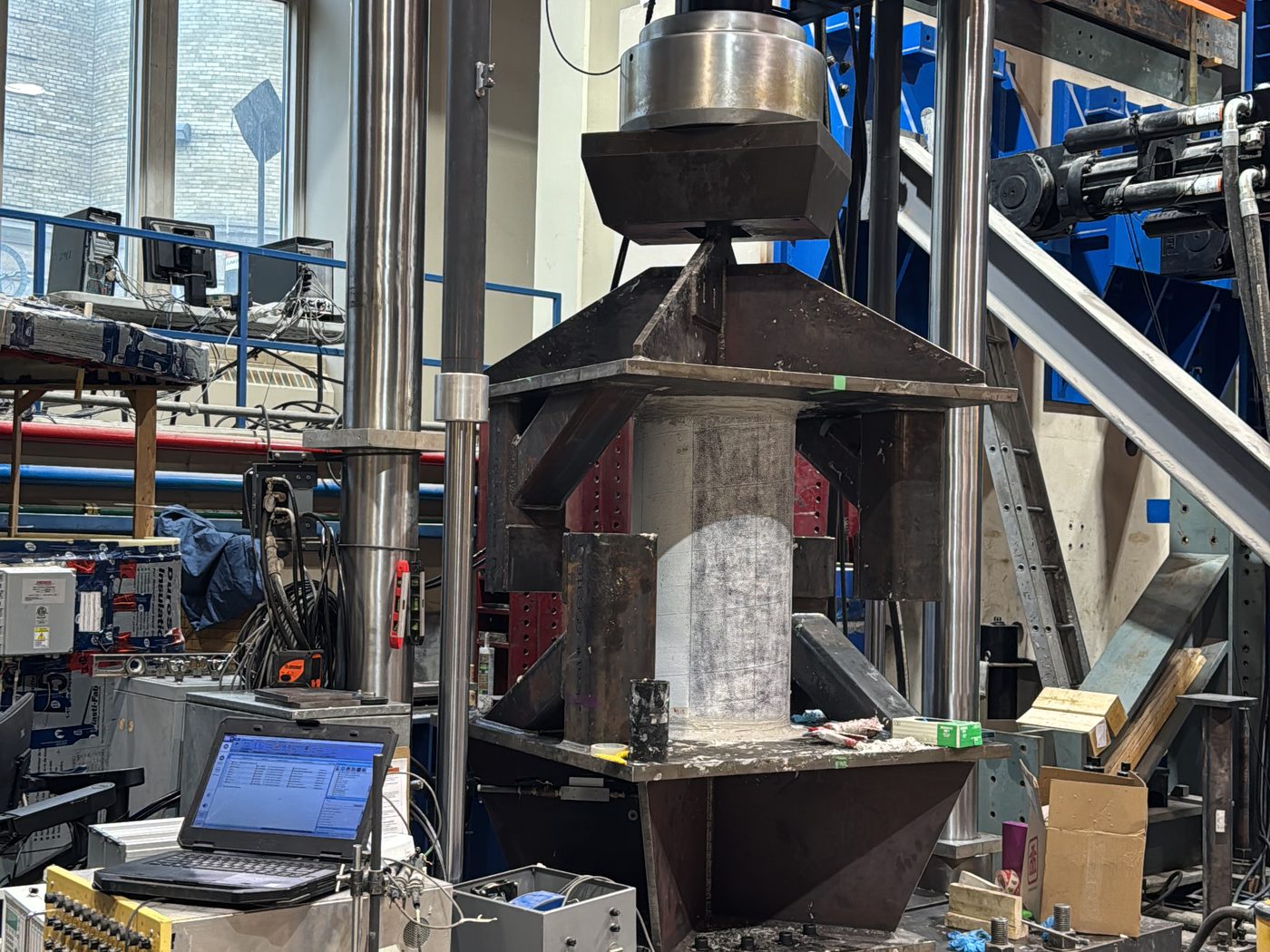
I supported the fabrication, preparation, instrumentation and testing of the concrete specimens used in the containment leakage experiments:
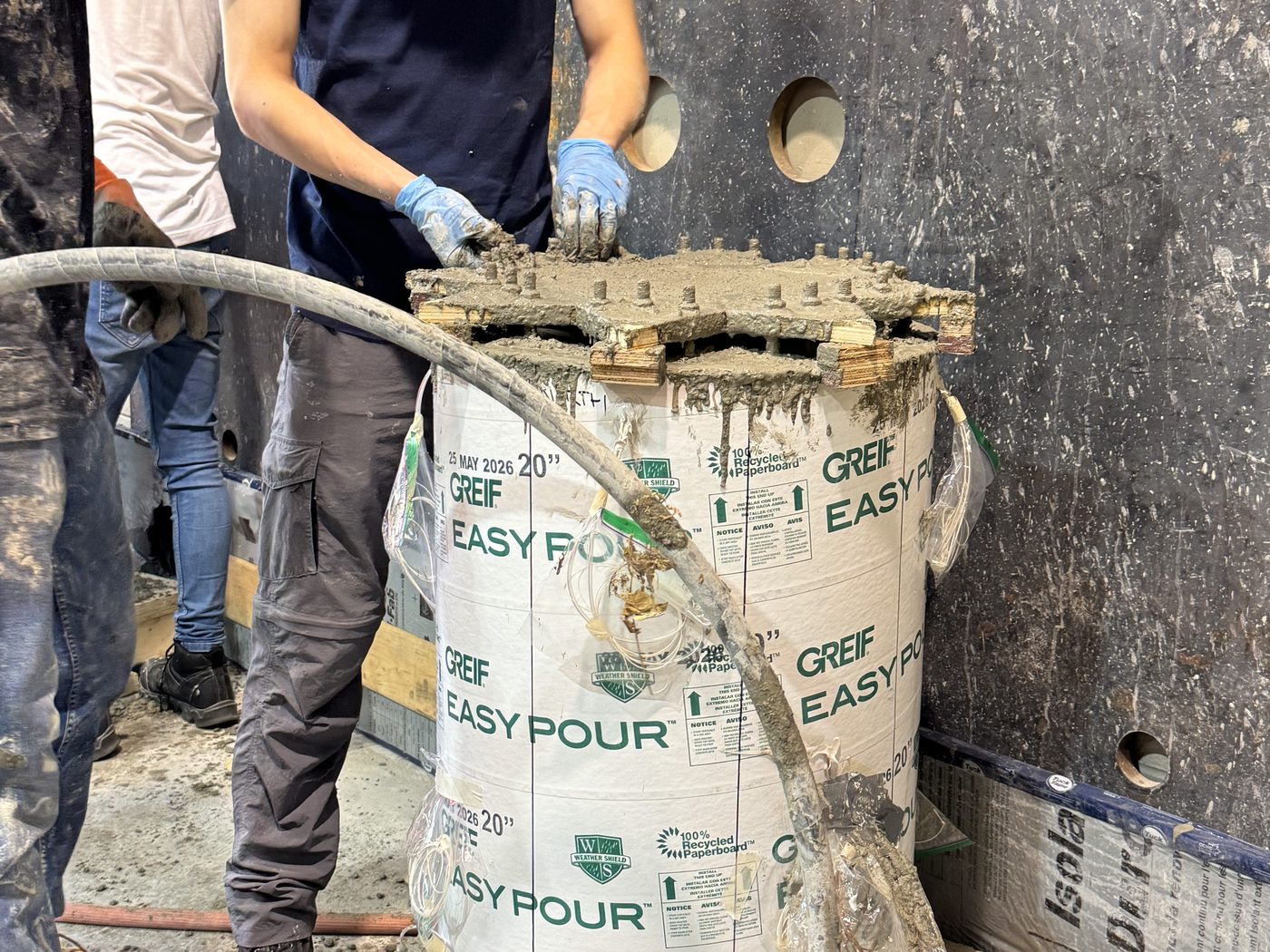
- Assisted with concrete casting, slump testing, consolidation and specimen preparation.
- Supported installation and preparation of specimens for tensile testing.
- Assisted with the MTS 2700 testing setup used to induce controlled cracking.
- Supported sealing of specimens so airflow was directed through the generated cracks.
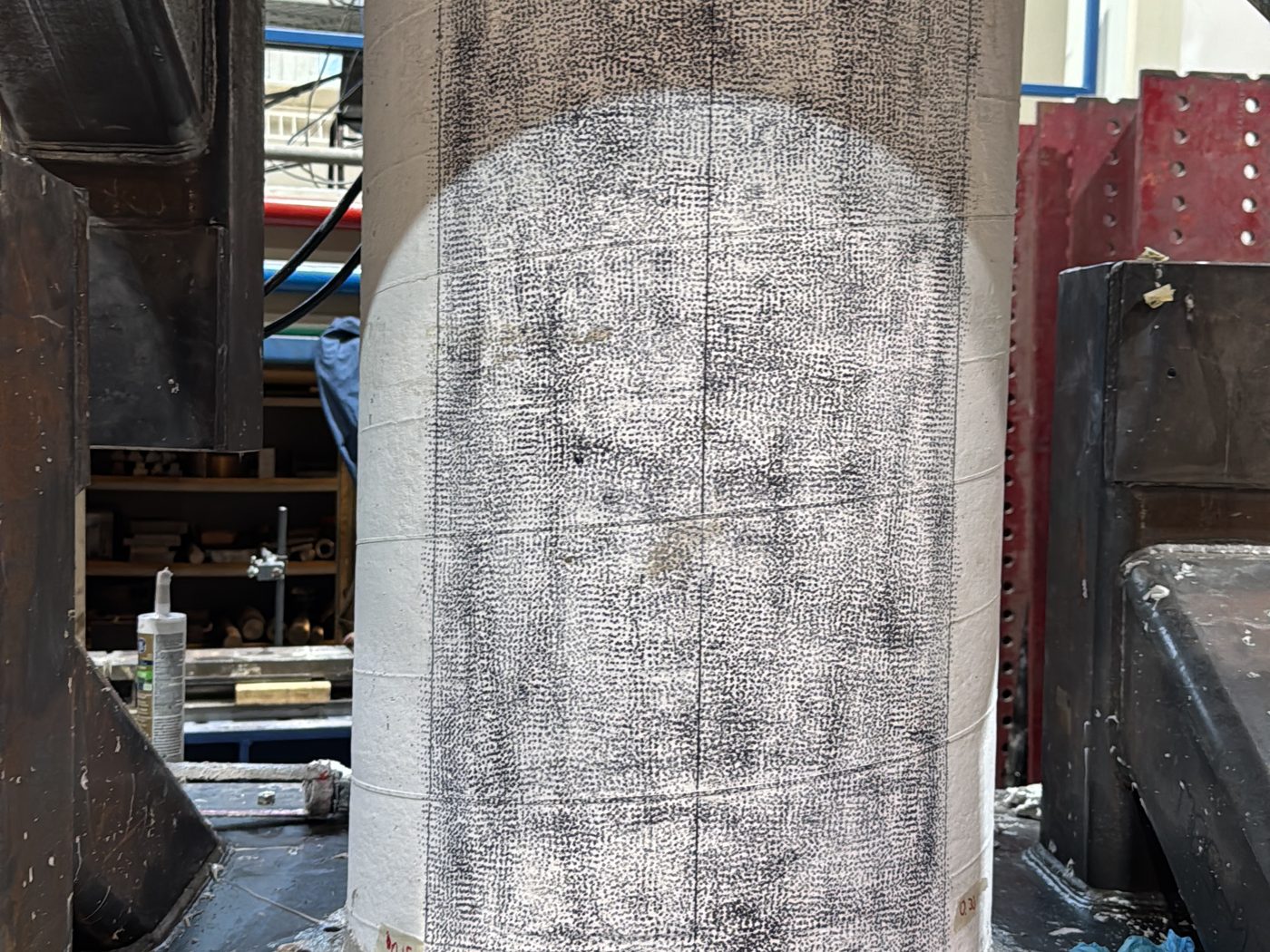
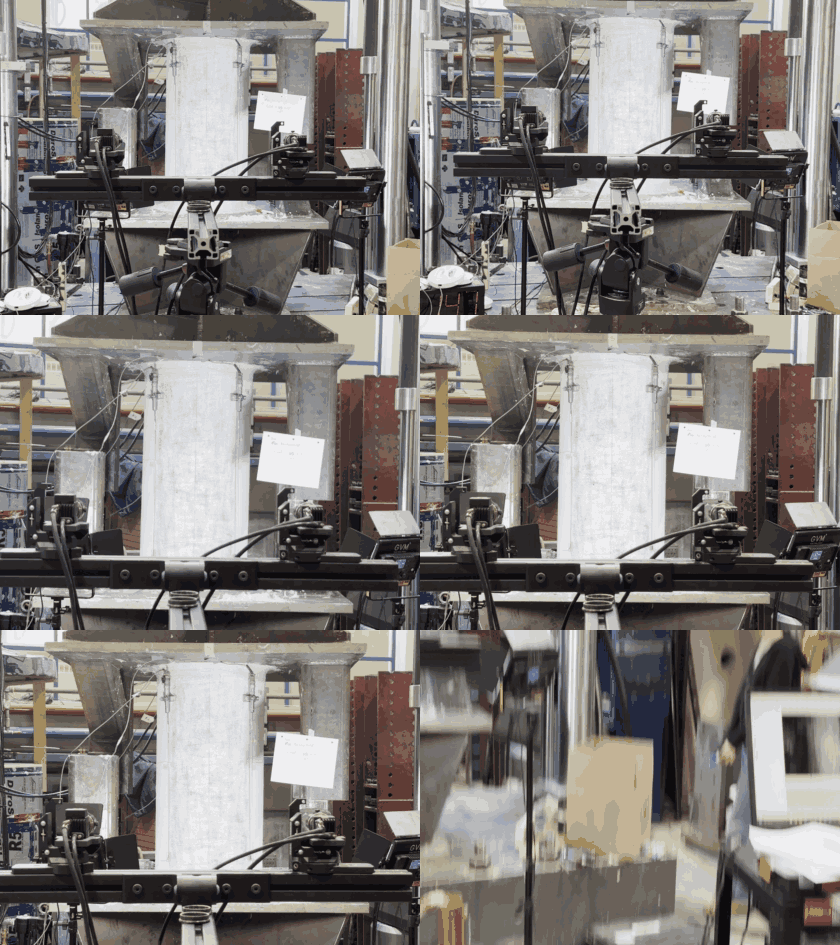
- Assisted with DIC and LVDT instrumentation for displacement and crack-width measurements.
- Gained exposure to experimental quality-control challenges, including premature cracking, concrete finish, sealing and background leakage.
03Structural system
Nuclear containment structures must limit the release of radioactive material during an accident. Rather than directly preventing cracking, this research focuses on predicting structural behaviour and leakage, allowing engineers and infrastructure managers to identify when maintenance may be required and reduce the risk of unexpected or premature plant shutdowns.
04Testing and data collection
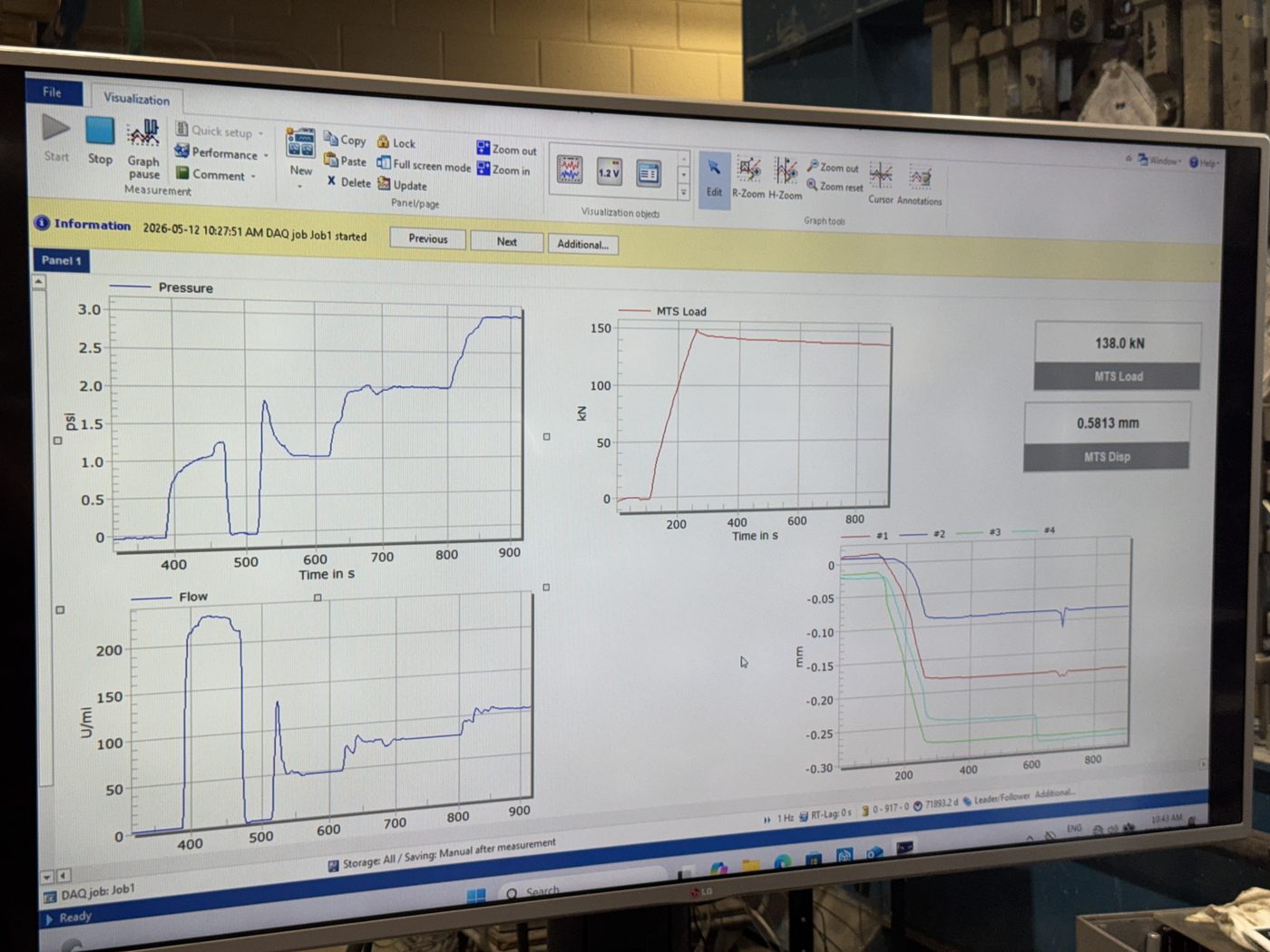
Concrete specimens are subjected to controlled tensile loading to progressively generate and widen cracks. At each load stage, internal pressure is increased from 1 to 15 psi with leakage measured at each level. Testing can involve roughly 10 load stages × 15 pressure stages, or up to 150 measurement conditions per specimen. The experiments investigate multiple cracking conditions:
- Mechanically induced cracking
- Cold-joint cracking
- Shrinkage-induced cracking
- Long-term concrete shrinkage
- Crack width versus leakage rate
Concrete placement procedures were also refined to reduce bleed water and premature surface cracking, improving specimen quality and experimental reliability.
05Results and engineering significance
Experimental results contribute to a broader model capable of predicting when cracking develops and how much leakage can occur based on crack geometry and containment pressure. This gives engineers better information for evaluating aging nuclear infrastructure and planning maintenance based on predicted structural performance rather than premature intervention.